As I sit on Daniel Island, SC (it is purely a coincidence that I am on vacation on an island with which I share a name), the doomer in me can't help but wonder what would derail this market.
Last week, we touched on inflation, and I still think it is the biggest risk. But why? The answer is rates. Higher rates, or perhaps even just the absence of cuts, could be enough to derail the bull market, especially if AI hypergrowth normalizes.
But you all know I don’t do narratives, so here is what I am seeing in the market…
S&P 500 and NASDAQ 100
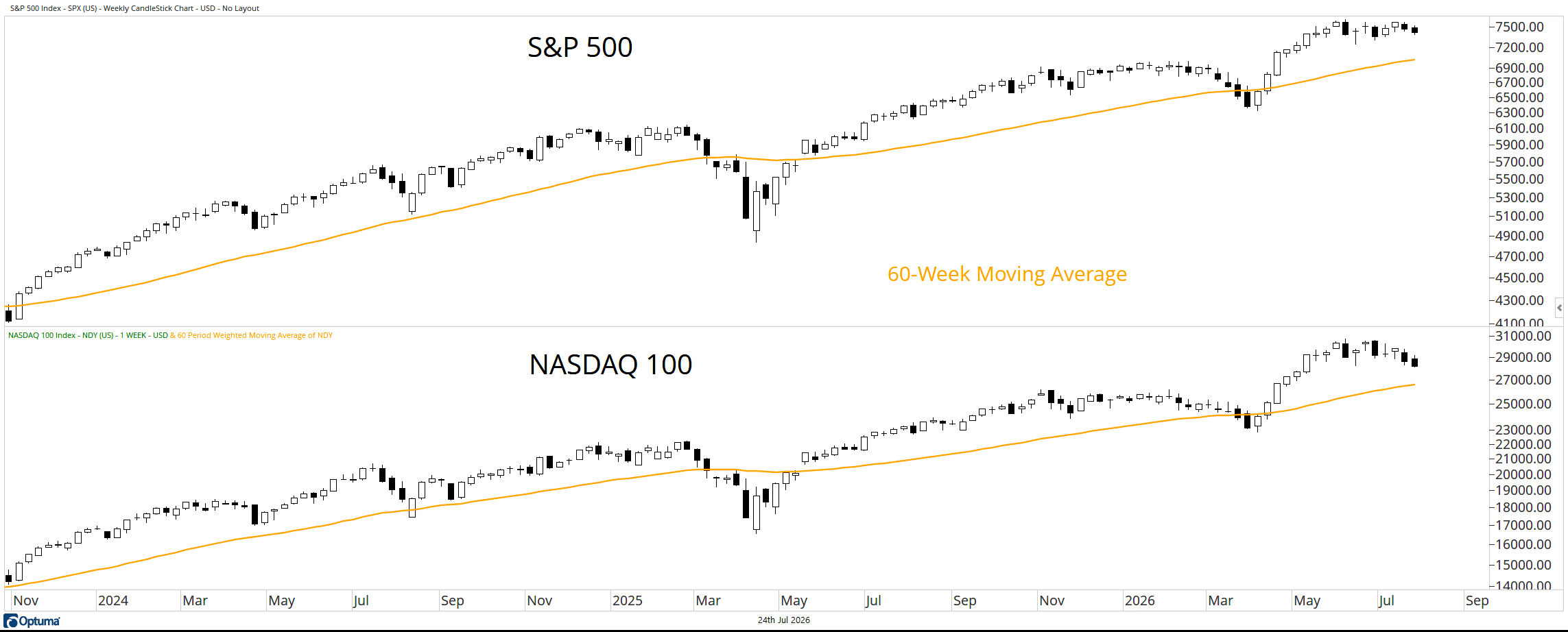
The two most widely followed indices are wobbling above rising 60-week moving averages, with the NASDAQ 100 looking a bit weaker than the S&P 500.
Both indices appear intent on paying a visit to those moving averages.
Source: Optuma
Too Much Weight
Once again, as we saw earlier this year, the market finds itself in a situation where too much weight is pressing down on it.
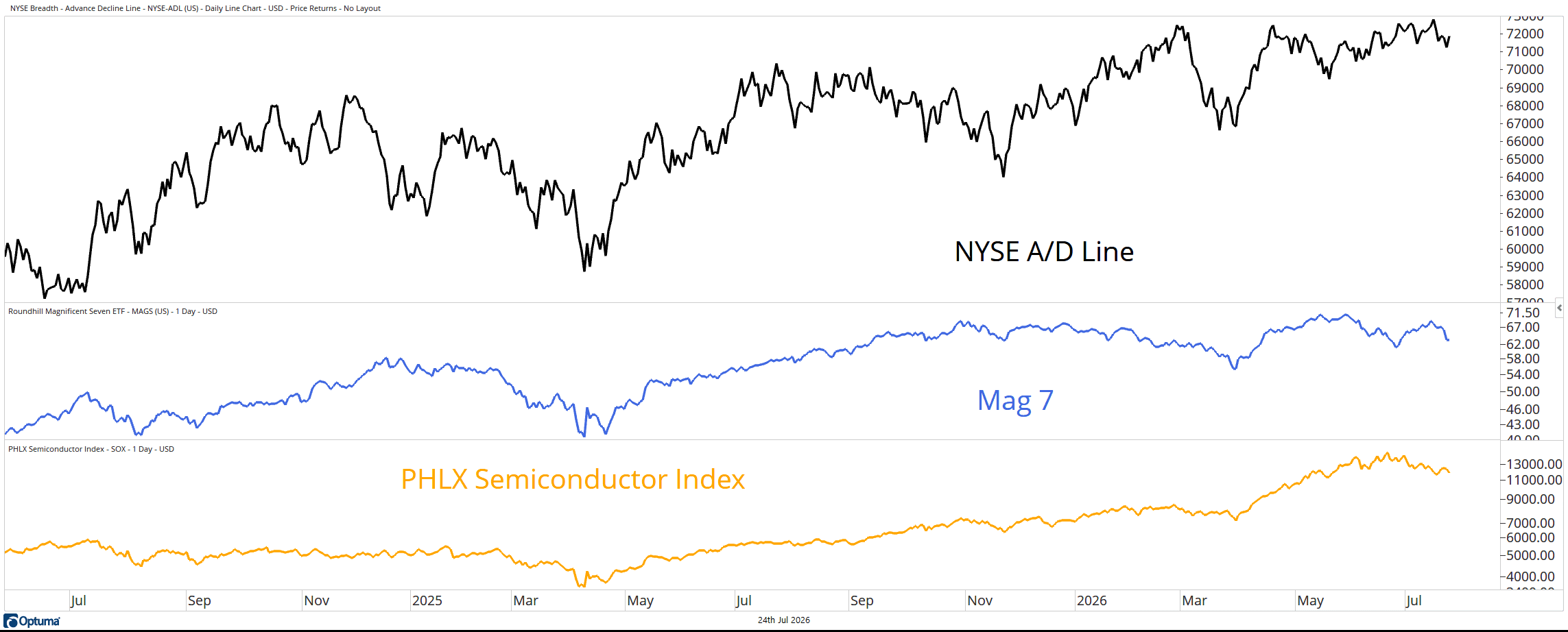
This is where AI normalization could become a problem. The Mag 7 and the semiconductors are coming under pressure. These are not just major themes in the market. They are major weights in the indices.
If these names remain weak, it almost doesn't matter that the NYSE Advance/Decline Line is near its highs. In that scenario, the best the indices can hope for is what they have been doing for weeks: treading water.
Source: Optuma
Seasonality
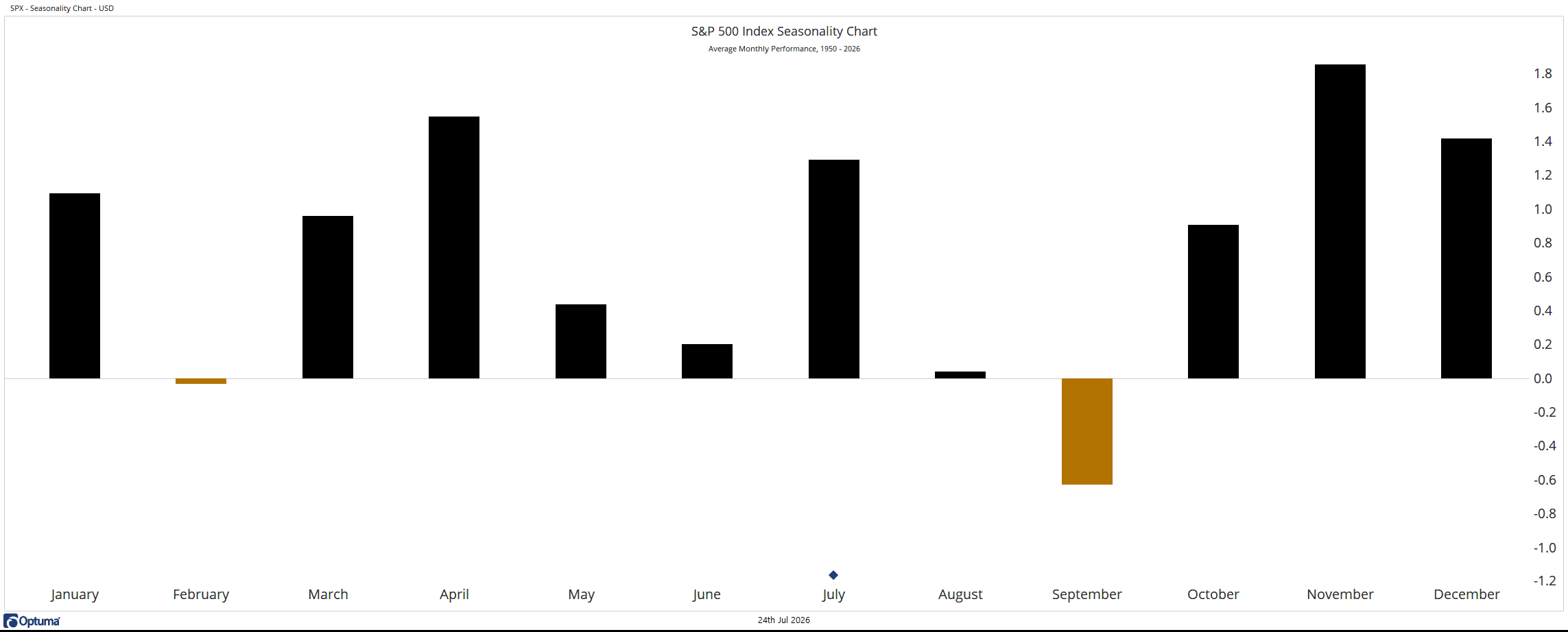
Unfortunately for the bulls, July 2026 has been weak so far, despite July historically being one of the stronger months for the S&P 500. That should catch the attention of the seasonality people.
From here, we move into August, which is only modestly positive on average, followed by September, which remains historically the weakest month of the year.
Source: Optuma
Treasuries Are Not a Haven
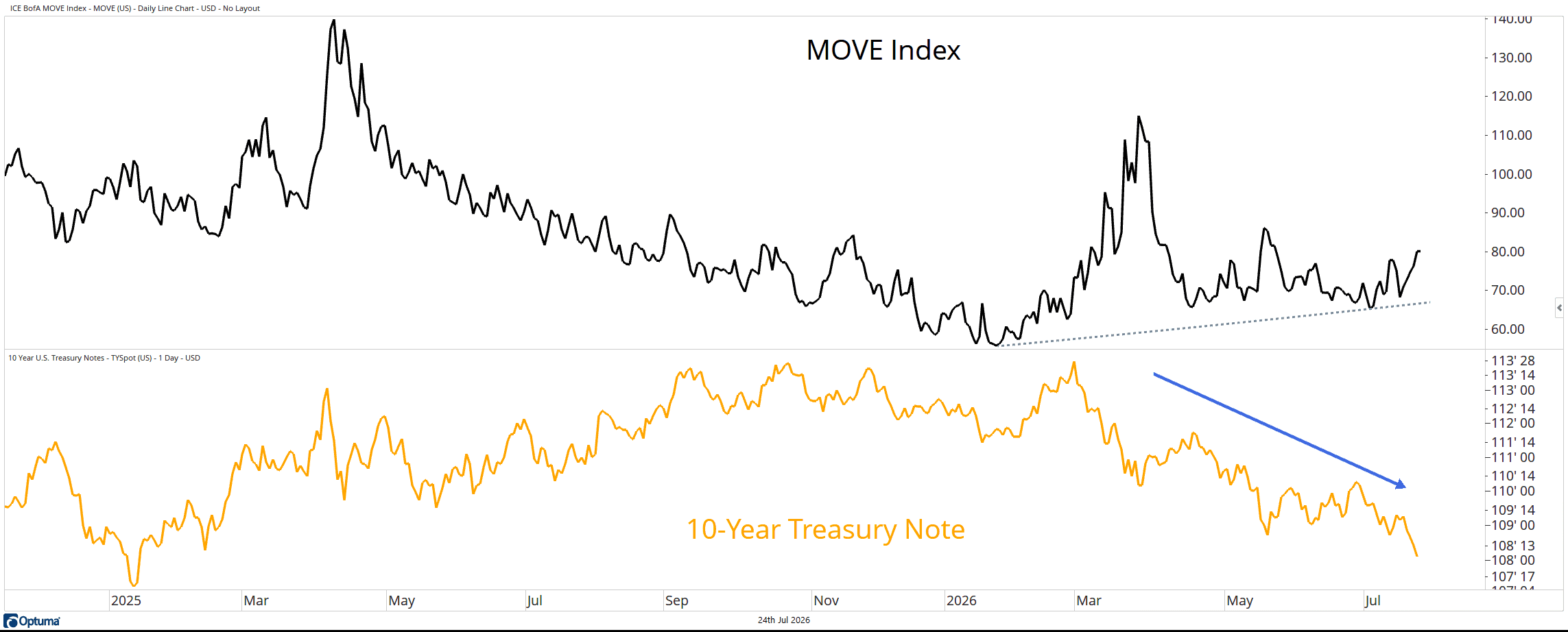
For those who have not been listening to us over the past four years, let me repeat something we have said many times: in an inflationary environment, the bonds in your portfolio may not do what you expect them to do.
A higher low in the MOVE Index (Treasury volatility) is being met with a lower low in the 10-Year Treasury Note price.
Source: Optuma
Final Thoughts
Sticky inflation means rates stay higher for longer. Higher for longer on rates pressures the AI trade which is seeing spending normalize as large capital expenditure outplays are lapped. A weaker AI trade likely means too much weight pressing down on the market. If we are going lower, the AI trade is why, but rates are the catalyst.


