
Despite my unfairly given nickname, "Doomsday Dan," we have never been known to be part of the "this is going to end badly" crowd. You know these types, the doomsayers who are always bearish (as in, since 2009 always bearish).
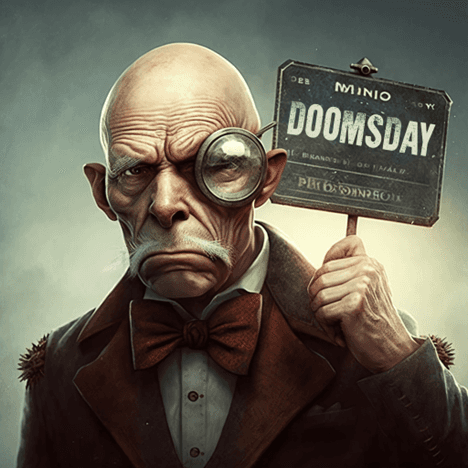
With each record high for the index or market-darling stock, these people will show you an arithmetic scale chart, the one that looks like the left side of a parabola, to make the point that the market or stock will eventually come crashing down. What these people produce can hardly be considered analysis; it is nothing more than clickbait and scary headlines. The title of this note is 100% parody!
We have always been part of the objective research and probability crowd. We do not let our subjective views on the market drive investment decisions. We let the models dictate our views and positioning.
While we still do not fall into the first camp laid out above, we can't help but notice that the trend in the equity market cannot be defined as healthy.
At least, not the way that we look at it. Our systematic investment process aims to answer three important questions:
What is the trend in the market? Up
Is that trend healthy? No
Is that trend confirmed by intermarket themes? Yes & No
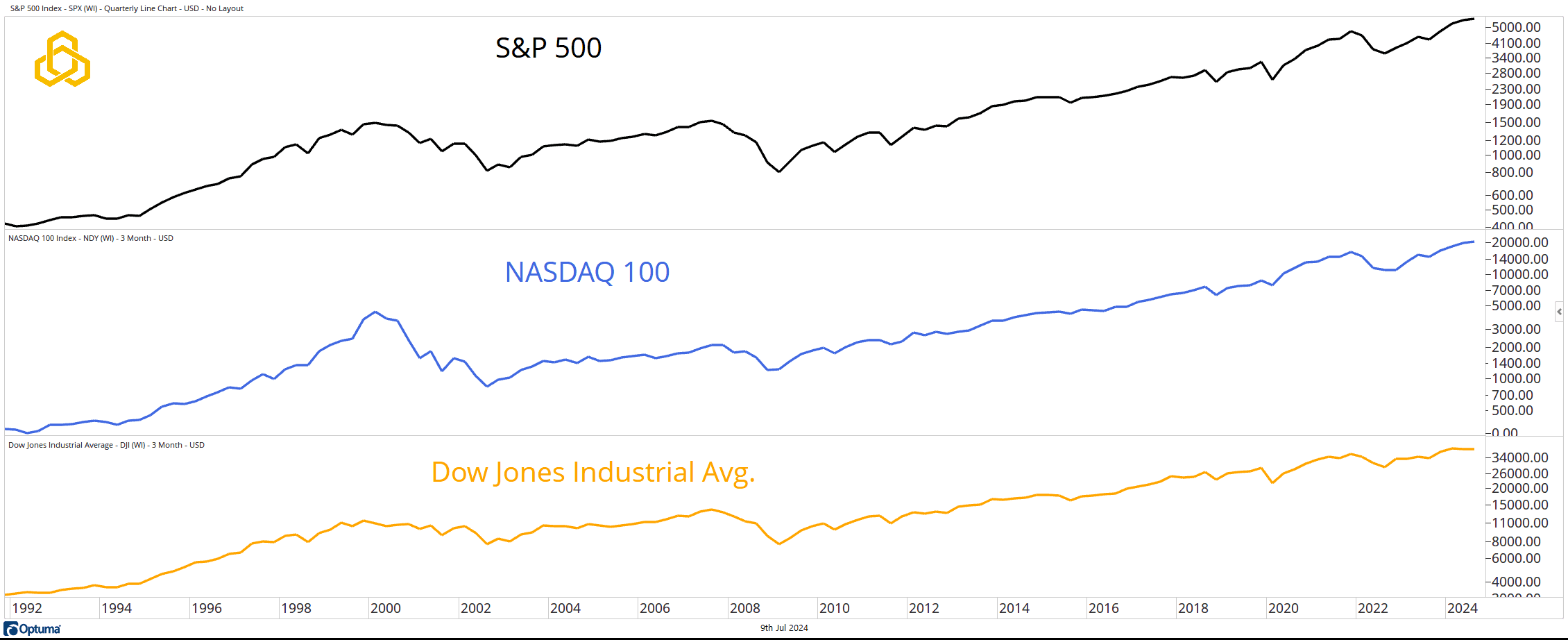
For the sake of simplicity, here are three quarterly charts: the S&P 500, the NASDAQ 100, and the Dow Jones Industrial Average. All three are at or near all-time highs. It is impossible to argue that the trend in the market is anything but up.
This brings us to health.
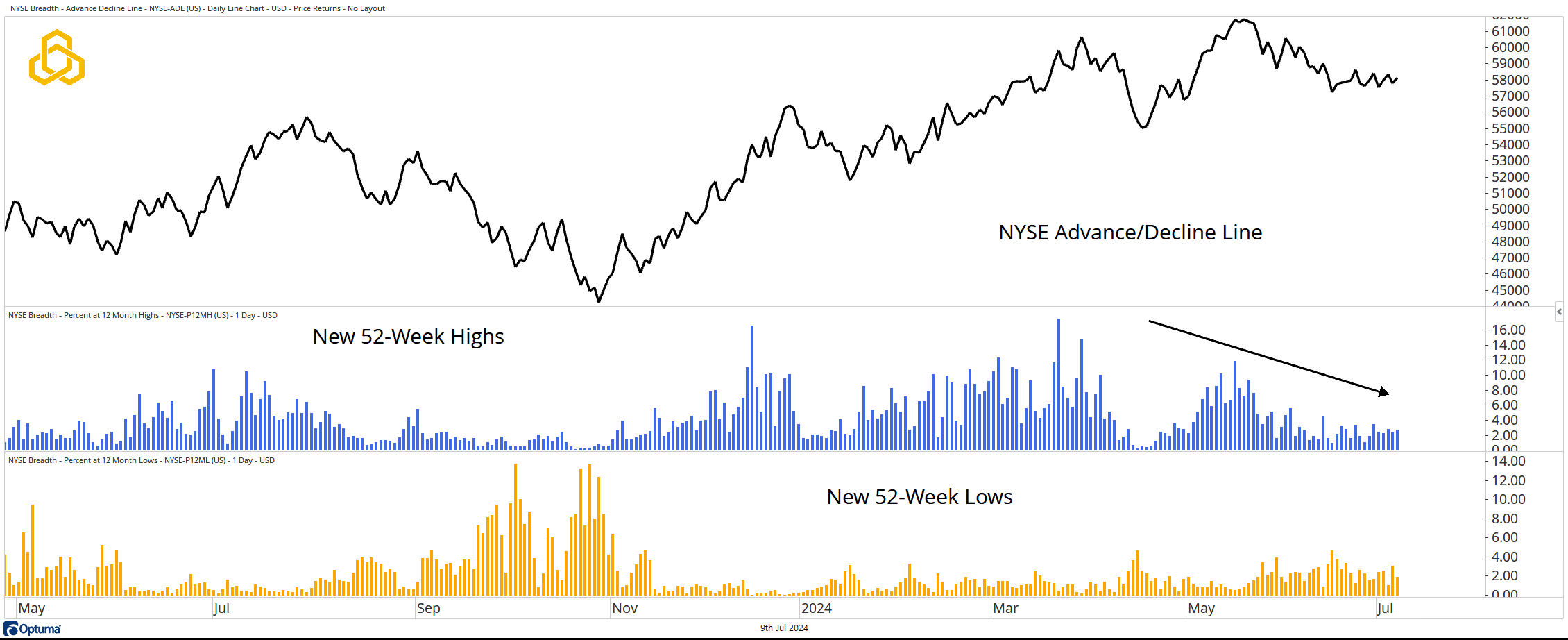
In a strong bull market that is making new all-time highs, we would expect to see more stocks going up than going down...we are not.
In a strong bull market, we would expect to see a lot of stocks making new 52-week highs...we are not.
In a strong bull market, we would expect to see a lot more new highs than new lows...we are not.
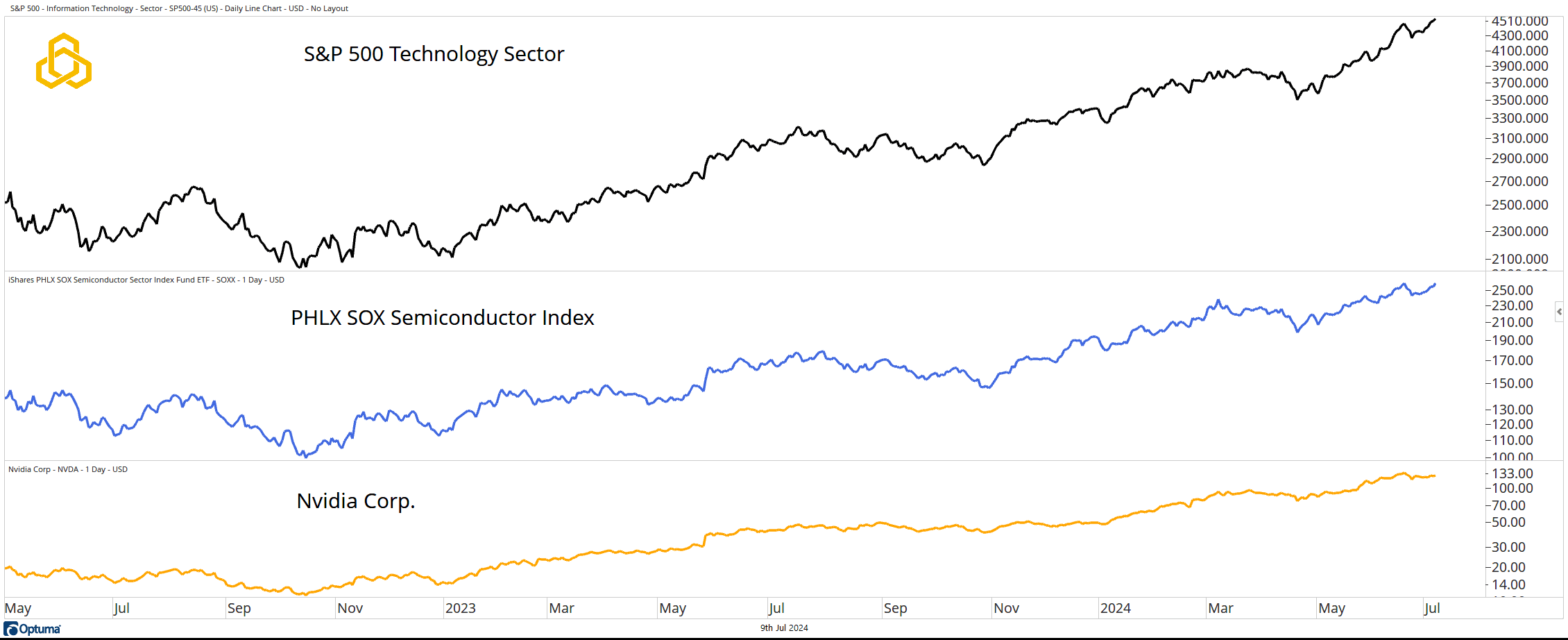
What are we seeing? We are seeing a market that is being held up mainly by one sector (Technology), which is being driven by mainly one industry group (semiconductors), which is riding the wave of mainly one stock (Nvidia).
In fact, Jim Bianco of Bianco Research points out that the five largest stocks in the S&P 500 account for nearly 30% of the index as of June 30, 2024.
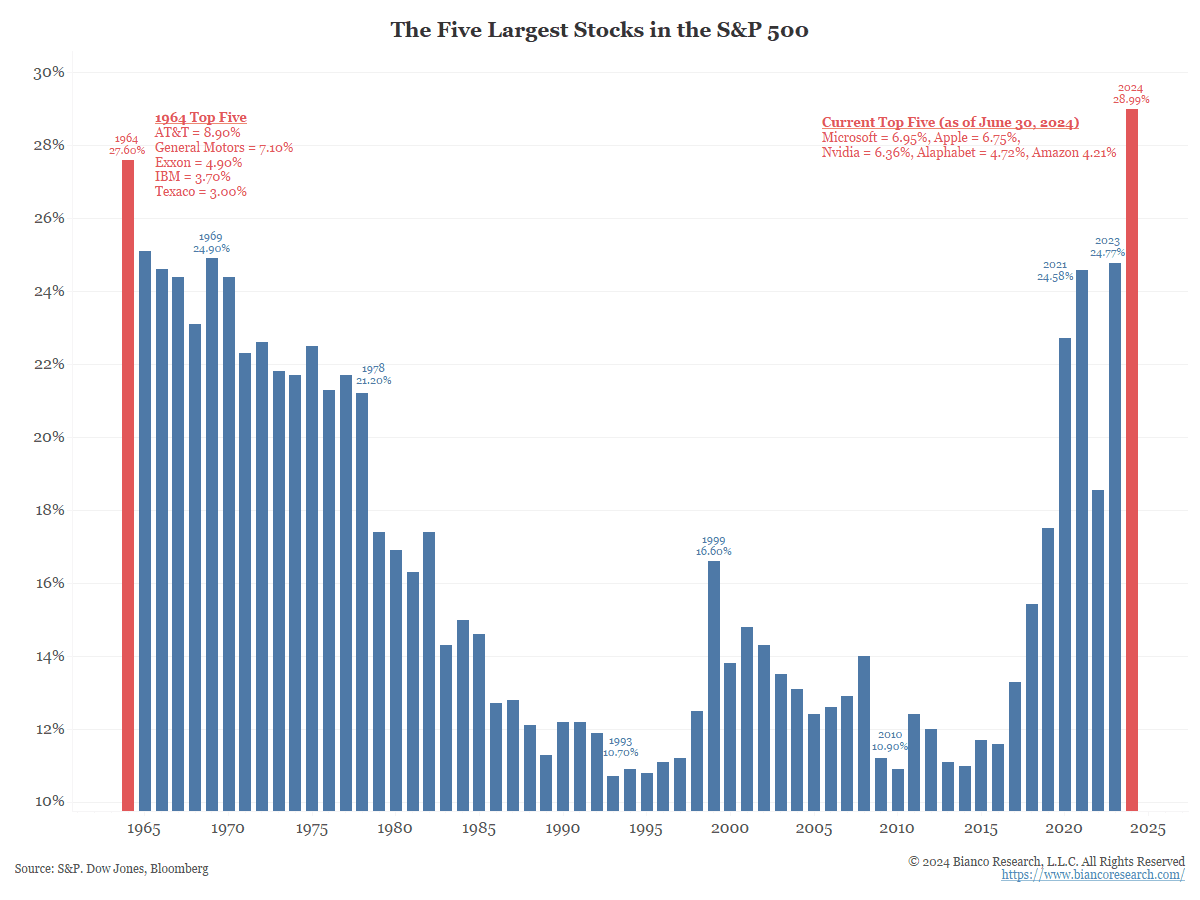
This is a level of concentration that greatly exceeds what was achieved in 1999 ahead of the bursting of the dot-com bubble; cue the "this is going to end badly" crowd. The problem with this line of thinking is that the exact same case could have been made in any of the past 5 years and save for COVID, the market has generally shrugged it off. Yes, I know 2022 was a tough year, but I don't think an intellectually honest person can say that "it ended badly."
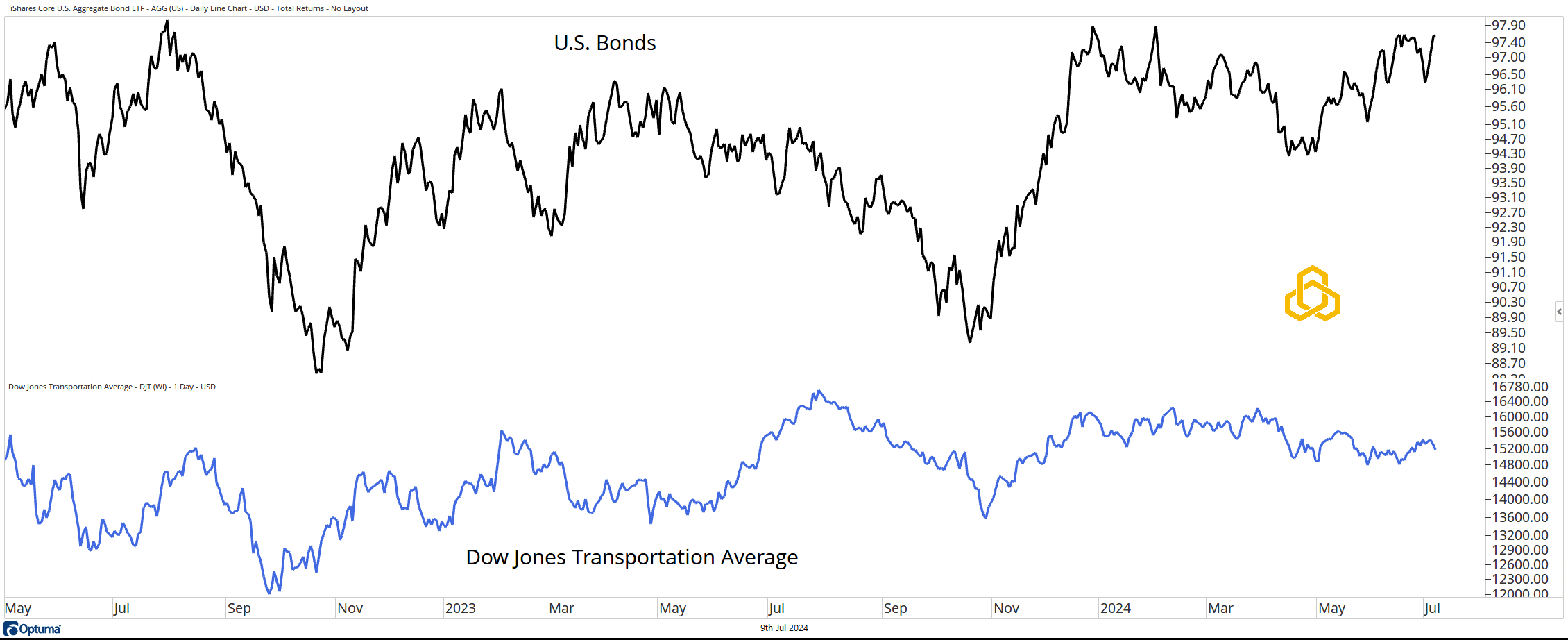
Next up is intermarket confirmation. We pay close attention to bonds and to the Dow Jones Transportation Average. Those who have been paying close attention to our work over the past two years know that we are early to the theme that stocks and bonds are now positively correlated, so we are not surprised to see aggregate U.S. bonds trading near new highs on a total return basis.
However, Dow Transports have been mired in a consolidation, failing to confirm the strength in the broader market. Old-time technical analysts will note that this is a non-confirmation that would likely cause Charles Dow to sit up and take notice.
So, is it going to end badly? I can't answer that because I don't even know what that means. Define "ends badly." Is it a 50% drawdown in the S&P 500? Is it an 80% drawdown in the NASDAQ 100? Is it a recession? Is it a depression? If your neighbor loses his/her job, did it end badly for them? If you keep your job, did it end badly for you? These phrases are meaningless.
Will the market take a 20% hit at some point? Yes. Will we have a recession at some point? Yes. Will the unemployment rate spike at some point? Yes. Can I make intermediate-term investment decisions based on answering Yes to these questions? No.
For now, the deterioration in the health of the trend has reached a point where it will likely be more difficult for our models to stay invested for meaningful lengths of time. There will be some short-term opportunities which we will act on as the model directs.
Will it end badly? I have no idea.
*All price charts from Optuma as of the close of trading on July 8, 2024
PFM-342-20240712