
The U.S./Israel - Iran Conflict: Perspective Over Panic
Having covered financial markets for nearly two decades now, we have seen our share of conflicts. Each time we are acutely aware of the human impact and that is always the most important aspect. War does, however, also influence financial markets and the global economy. It is often not long-lasting, but the immediate moves can be quick and volatile.
Oil Markets: Much Has Changed
With the U.S. now the world’s top oil producer, the impact on global energy markets will be felt, but a repeat of the 1973 Oil Crisis / Embargo seems unlikely. At the time, global oil prices surged roughly 300% from $3 per barrel to $12 per barrel. Year-to-date, Brent crude oil prices are up a substantial but more moderate 36.3%. If Wall Street’s calls for a $80-$100 per barrel trading range for Brent crude oil are accurate, this could cap the upside to a roughly 60% surge from the start of 2026.1
This is material, and the recently released February reading of ISM manufacturing’s prices paid component, which measures input costs, should serve as an early warning that the economy remains sensitive to inflationary risk (see figure 1). Importantly, the Federal Reserve does have some time to assess with the next rate cut not expected until July, but a prolonged conflict could potentially push rate cuts back further. This is not the base case yet, but it should be monitored.
Figure 1. ISM Manufacturing Prices Paid vs. U.S. Inflation
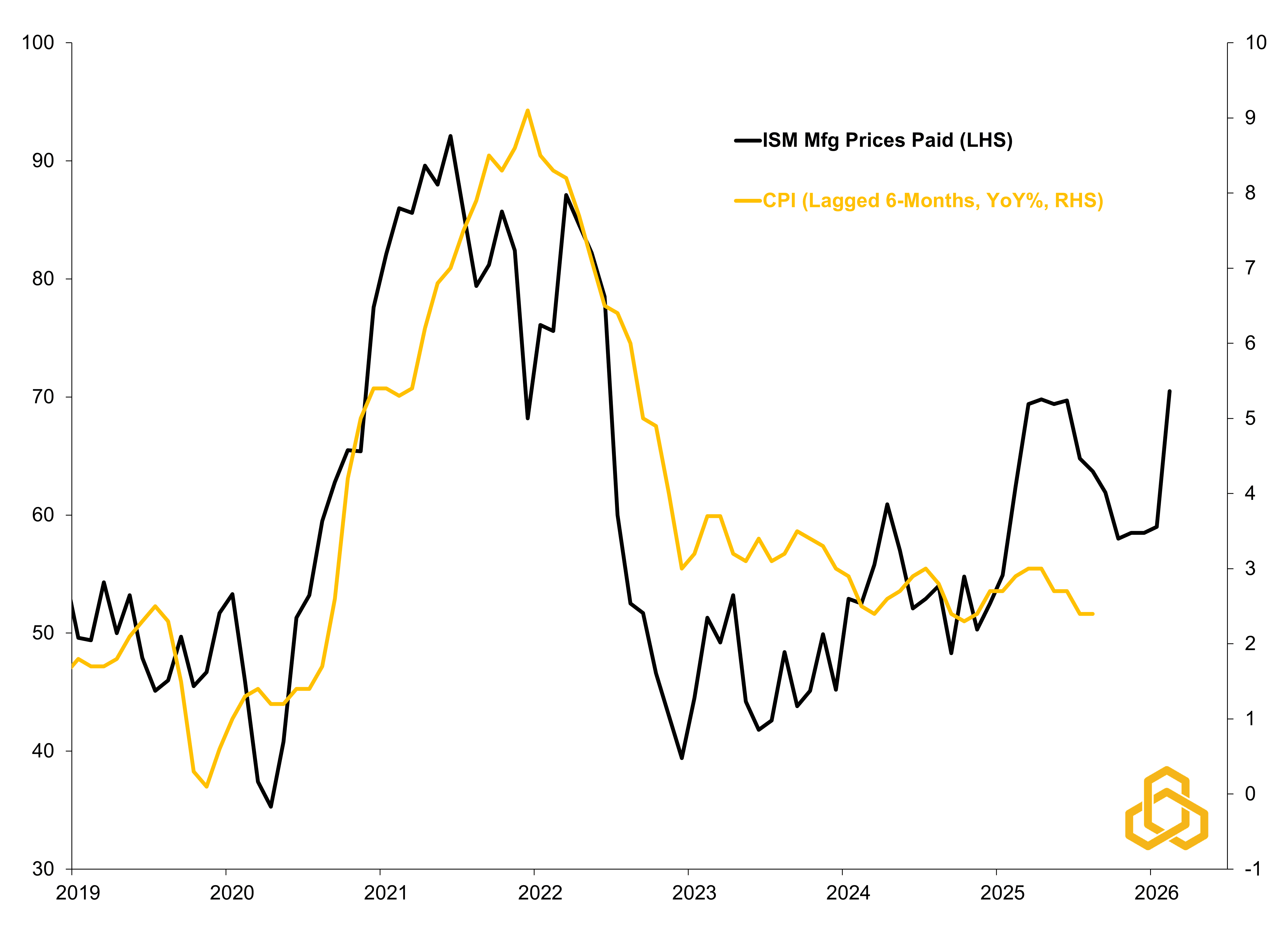
Sources: Institute for Supply Management, Bureau of Labor Statistics, Bloomberg L.P., and Potomac. Data as of February 2026 for ISM; January 2026 for CPI. Note: A reading of above 50 on the ISM is consistent with rising prices and below is consistent with falling prices.
On a more encouraging note, much has changed over the past few decades. U.S. consumer spending on energy has fallen to historic lows, reaching 3.7% in 2025, reflecting improved energy efficiency, shifts in the economy away from manufacturing, and relatively stable oil prices when compared to the 1970s and 80s (see figure 2).
Figure 2. U.S. Consumer Spending on Energy (As a % of Total Spending)
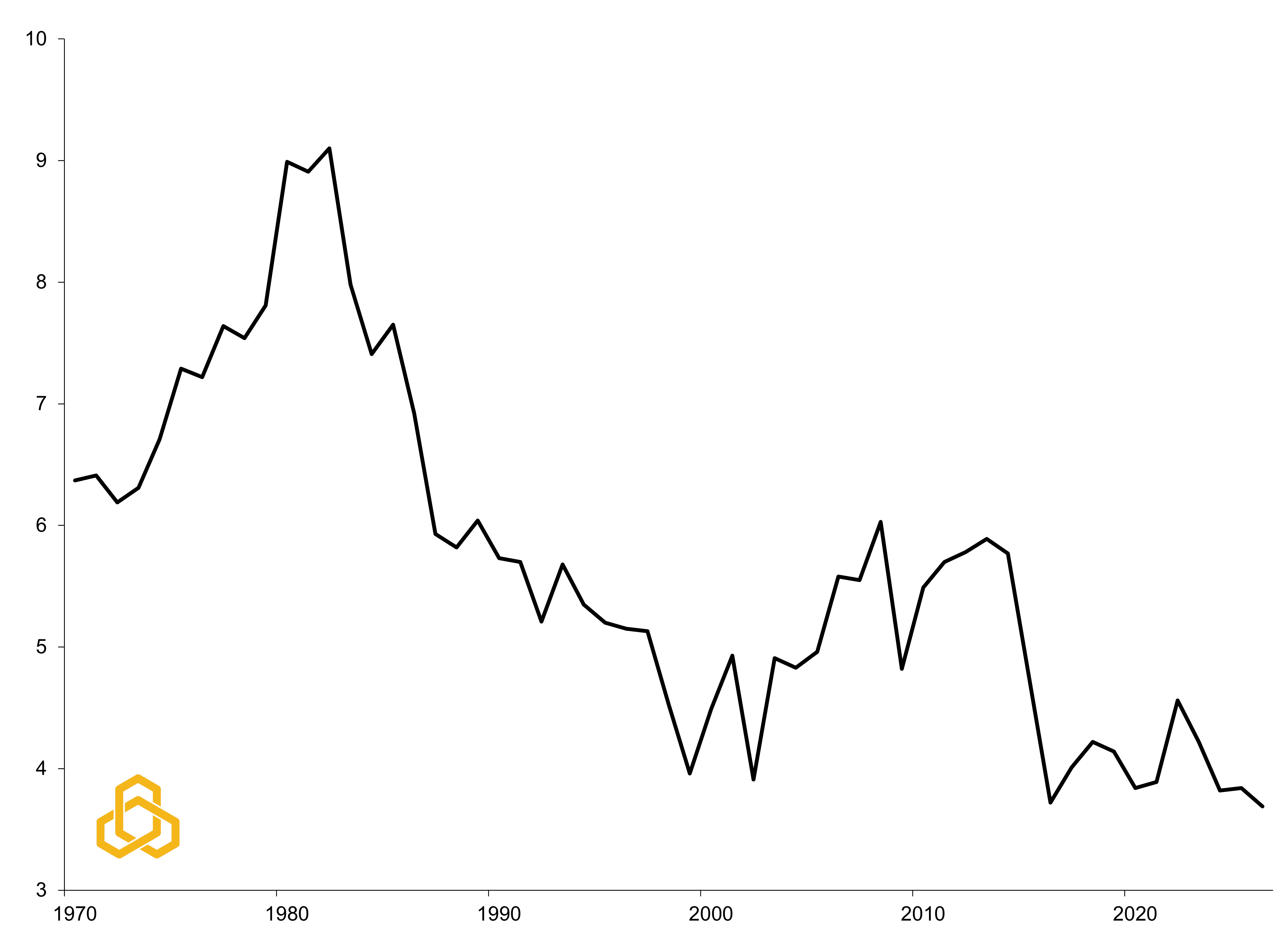
Sources: Bureau of Economic Analysis, Bloomberg L.P., and Potomac. Data as of December 31, 2025.
In addition, the U.S. is now producing approximately 13 million barrels of oil per day compared to Iran’s production of around 3-4 million barrels a day. With the United States producing roughly 3-4 times more oil than Iran (see figure 3), this could provide a stronger buffer for supply. Combined with reduced consumer spending on energy, these dynamics should help reduce the economic impact of commodity shocks.
Figure 3. U.S. and Iran Oil Production (Millions of Barrels per Day)
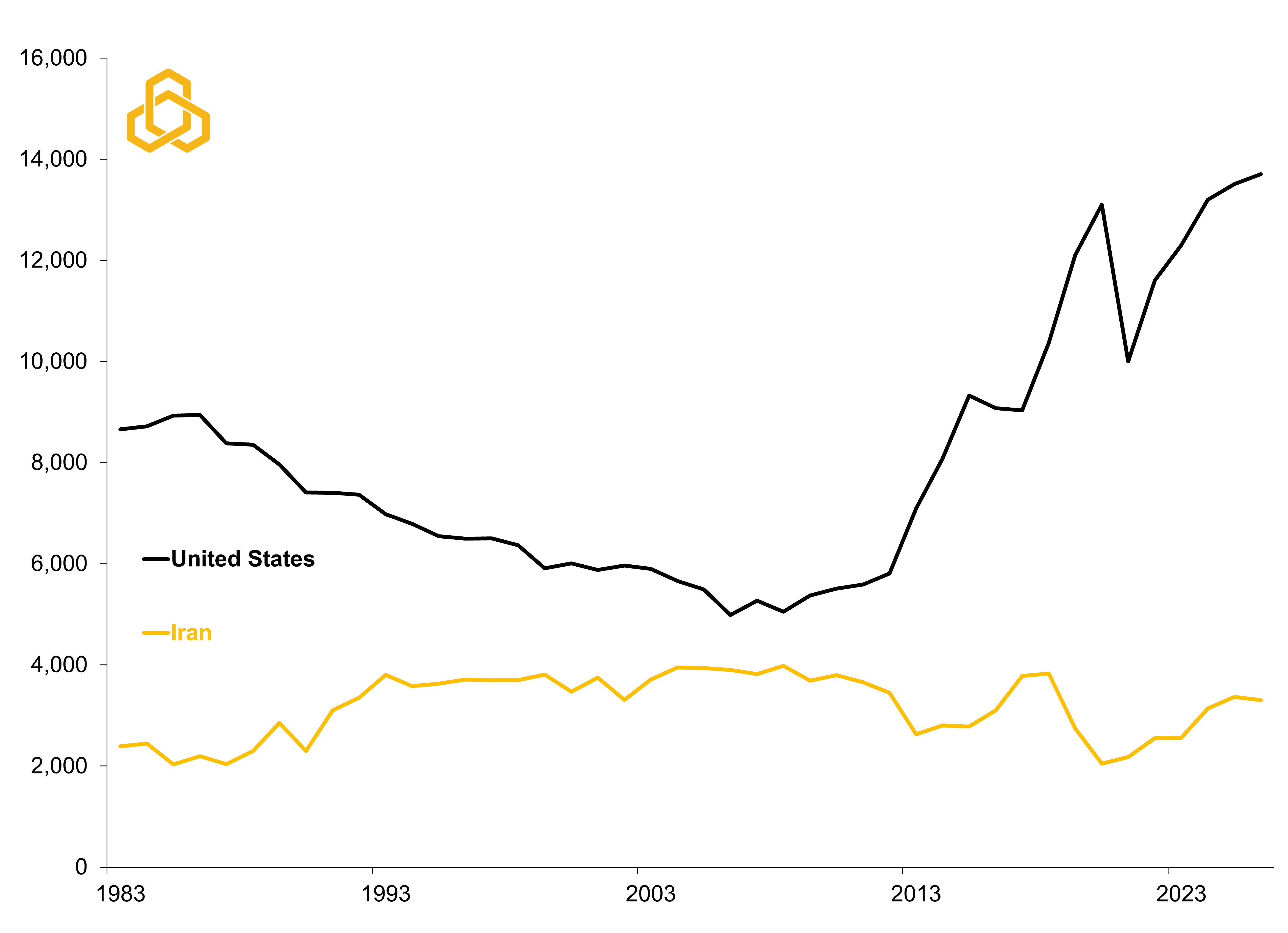
Sources: Department of Energy, Organization of Petroleum Exporting Countries (OPEC), Bloomberg L.P., and Potomac. Data as of January 31, 2026.
Natural Gas: A Different Story
Away from oil, the impact on European liquefied natural gas (LNG) prices has been more extreme after Qatar Energy shut down the world’s largest LNG production plant after it was targeted with an Iranian drone attack. Prices are also reacting to tanker traffic being halted through the Strait of Hormuz, a shipping route which about one-fifth of the world’s LNG travels through. As a result, natural gas futures surged as much as 80% - the sharpest spike since August 2023.
These dynamics bare watching in the weeks ahead with EU LNG storage lower than normal at about 30% capacity, but we think it is once again helpful to put the price movements into perspective. During the Russian invasion of Ukraine, the EU was not as well diversified with Russia supplying approximately 40% of Europe’s natural gas and prices soared. By comparison, Qatar supplies about 8% of the European Union’s LNG imports and price movements pale in comparison (see figure 4).
While a sustained closure of the Strait of Hormuz could cause inflationary pressures across the region and impact central bank decisions, we would hesitate to make direct comparisons of the two geopolitical events.
Figure 4. ICE Endex Dutch TTF Natural Gas Futures Contract (EUR/MWh)
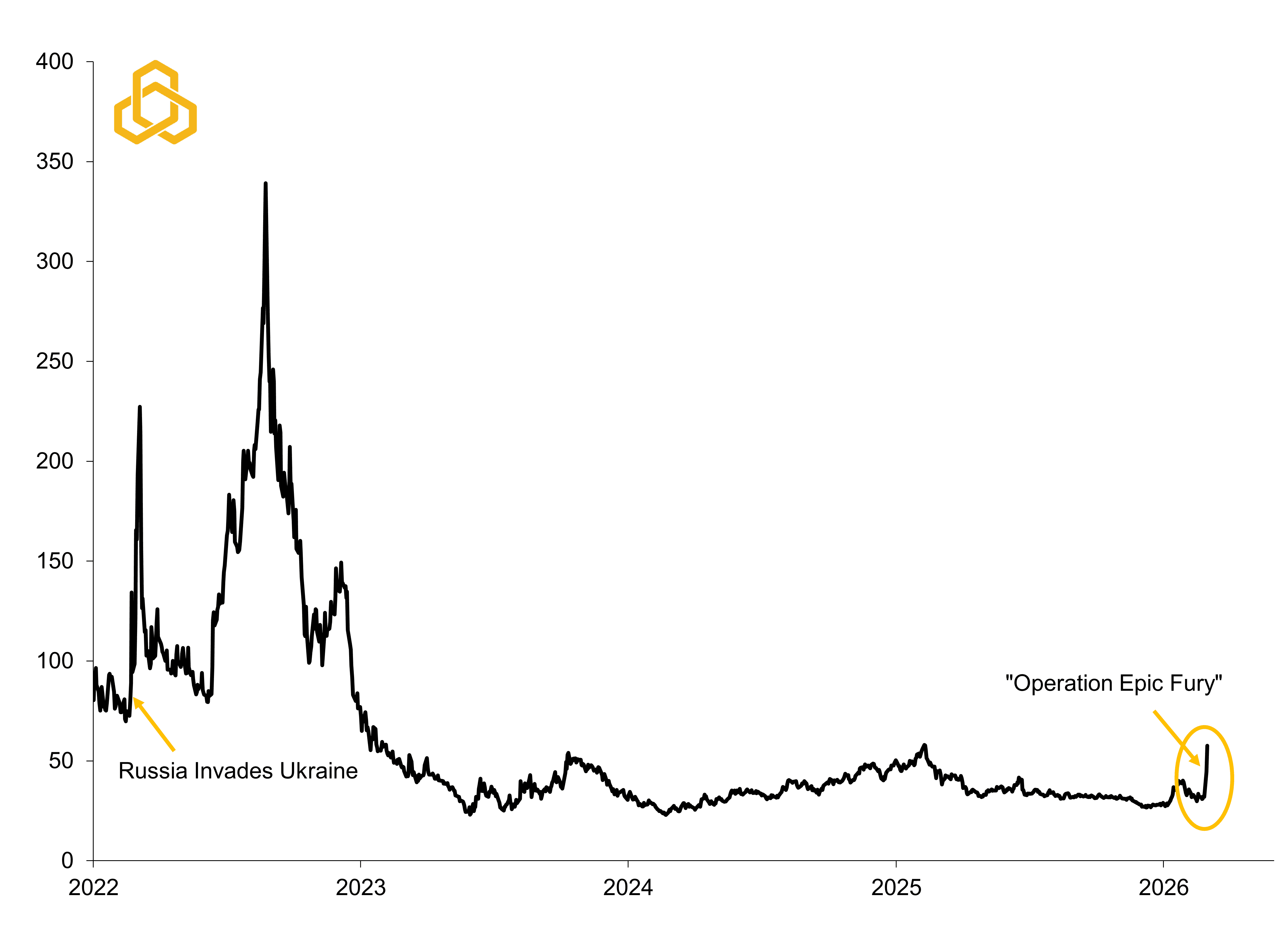
Sources: EDX-ICE Index, Bloomberg L.P., and Potomac. Data as of March 2, 2026. Past performance is no guarantee of future results. It is not possible to invest directly in an index.
The Stock Market: Impacts Tend to Fade with Time
From an investors’ lens, the conflict will probably create sector winners and losers over the near term. International airlines are facing significant cancelations across the region, and rising energy prices will likely weigh on companies facing significant freight costs. On the flip side, energy providers and defense companies may continue to benefit with the S&P 500 Energy and S&P Aerospace & Defense sectors up 26.8% and 16.1% year-to-date, respectively.
On a broader level, geopolitical events do not tend to have lasting impacts with the S&P 500 often recouping its losses and seeing positive returns over the following 12 months. Additionally, while oil often serves as a useful hedge in the several months that follow, it also tends to normalize as the conflict fades (see figure 5). We will continue to monitor the situation as it evolves, but past historical events serve as a reminder that staying calm is often the best reaction despite the jarring headlines.
Figure 5. S&P 500 Index Returns Following Select Geopolitical Events (%)
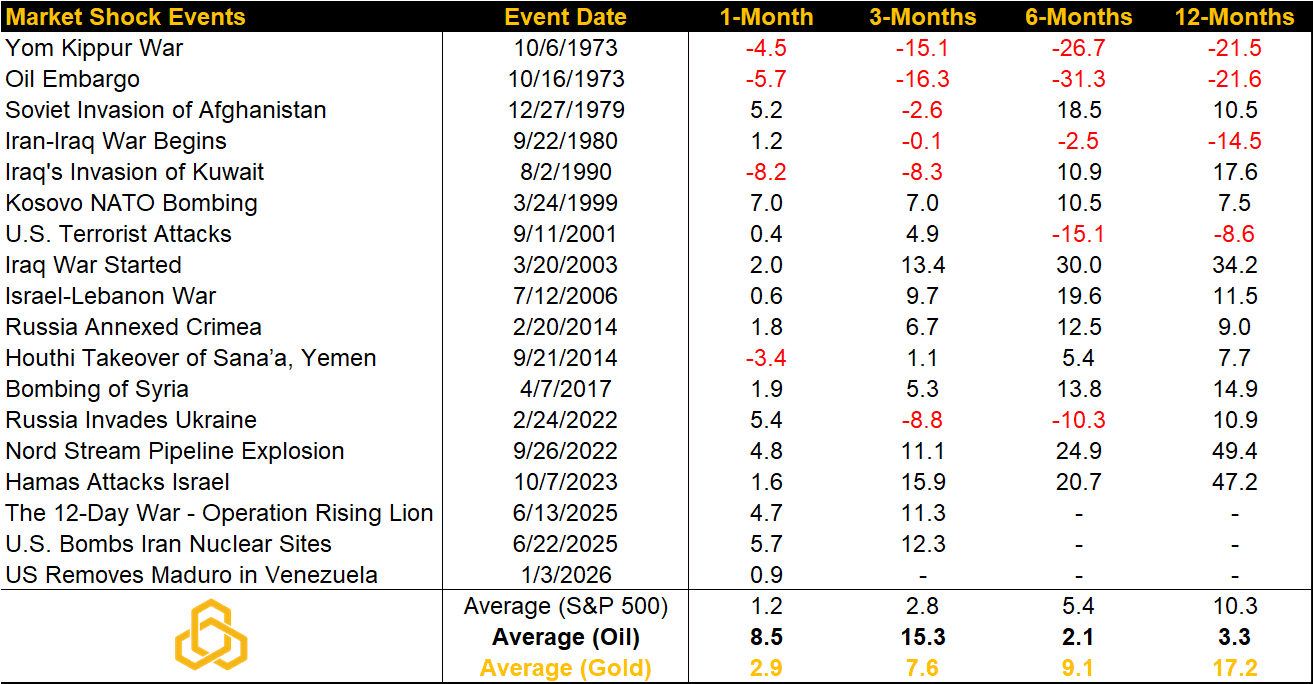
Sources: Standard & Poor’s, Bloomberg L.P., and Potomac. Data as of February 3, 2026. Past performance is no guarantee of future results. It is not possible to invest directly in an index. Note 1: The average change in oil price uses Bloomberg Arabian Gulf Arab Light Crude Spot prices between 1951 and April 1983 and Bloomberg West Texas Intermediate Cushing Crude Spot prices from May 1983 on.
PFM-314-20260303